
- August 25, 2026
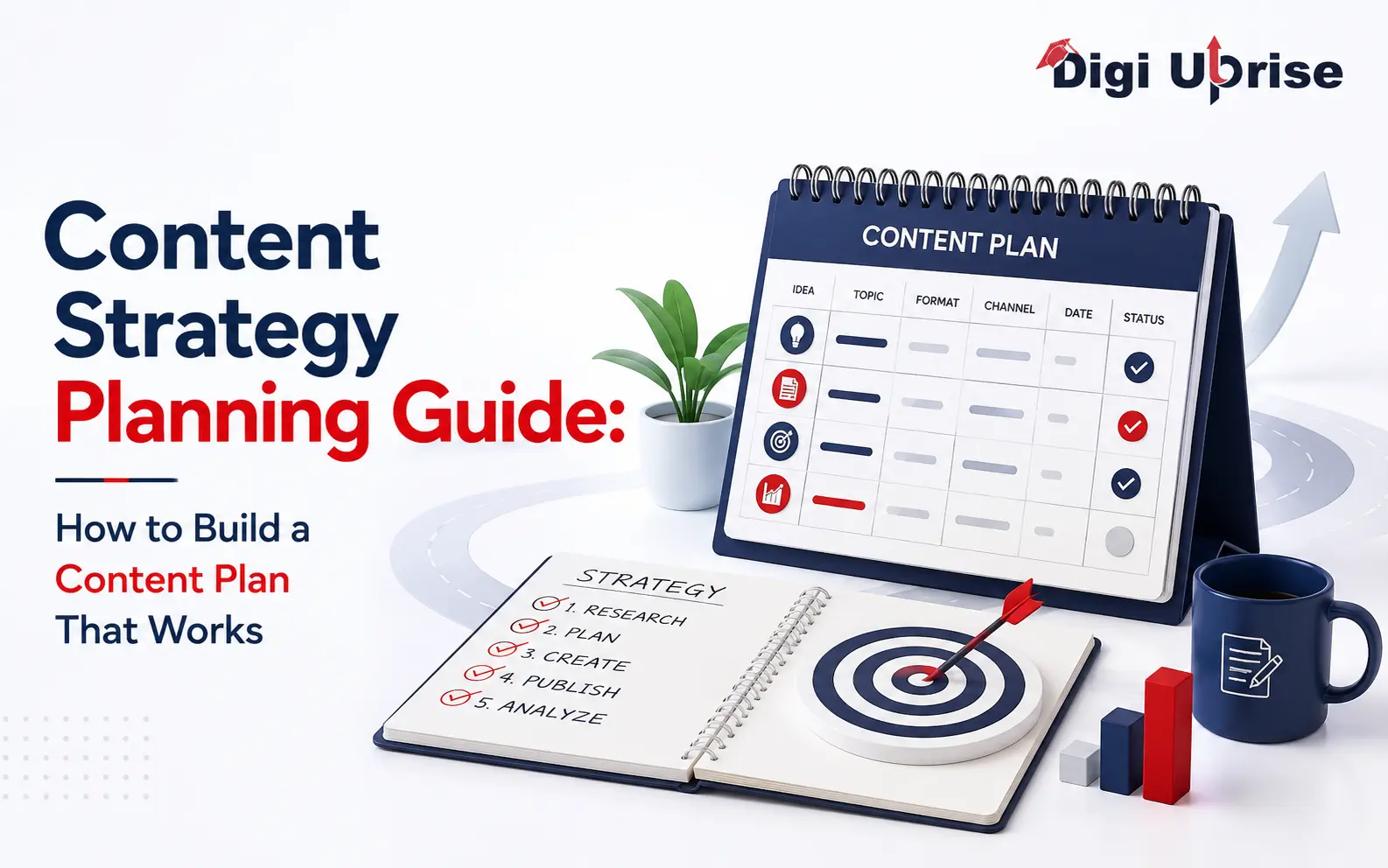
Content Strategy Planning Guide: How to Build a Content Plan That Works
Share with Friends :

Table of Contents
A good content strategy is not just about filling social media accounts and posting blog entries. Rather, it should tie together business objectives, audience needs, valuable topics, delivery methods, and metrics. This guide shows how to transform fragmented information into an effective publishing system that drives visibility, engagement, leads, and growth. It lets you publish regularly without wasting your time. You will be shown how to conduct audience research, define objectives, plan topics, create a content calendar, select formats, track metrics, and refine your strategy. The process is easy to follow even for beginners.
What Is Content Strategy Planning?
Getting to know the foundation
Content strategy planning entails making a decision on the type of content to develop, why such content is necessary, who should access such content, where it can be accessed, and how its success would be measured. The best approach begins with the objective of the business.
Why planning matters
Without planning, teams may end up rehashing subjects, forgetting about important deadlines, publishing haphazardly, or even producing material that gets attention but accomplishes nothing else. With a documented strategy, direction is established, and this is done through careful planning.
Element of Planning | Question |
Goal | What is the desired outcome? |
Target Audience | Whom do we serve? |
Problem | What problem can we solve? |
Presentation | How do we present it? |
Media | Where do people see it? |
Measurement | How do we measure success? |
Goal Setting and Audience Identification
Start with measurable goals
Goals need to be clear and tied to business objectives. A useful strategy will have goals with measures attached to them. Instead of “Increase website traffic,” a better goal would be “Increase non-branded organic visits by 20 percent in three months.”
Audience research
Produce simple audience segments with their needs and channel preferences. This involves looking at pain points, interests, objections, and buying stages for the audience. It will keep you on an audience-centric path instead of a brand-centric one.
Creating Effectively Structured Content Pillars
Group related topics
Pillars are high-level topics associated with the goals of your business. If you are promoting a digital marketing brand, some possible pillars could be SEO, social media, paid ads, email marketing, analytics, and career coaching. Aim for three to five pillars, then create a variety of topics under each one. This depth allows search engines and readers to see your expertise.
Combine several different types of content
Do not make all posts about promotion. The right combination should have educational, inspiring, entertaining, comparative, and sales-oriented content.
Content Type | Example |
Educational | “What is SEO?” |
Inspirational | Success story of a student |
Entertaining | Poll or question |
Trust-building | Case study |
Converting | Guide of course/service |
Tips for Creating a Content Calendar
Make an effective publishing schedule
An effective publishing schedule puts your strategy into practice. As you learn how to make a content calendar, start with a basic spreadsheet and learn how to make it efficiently. Include date, topic, pillar, format, channel, target keyword, owner, status, and call to action. An effective publishing process needs to be realistic. It is better to publish three quality pieces than to plan ten pieces that your team will not manage to publish.
Organize around priorities
Check how to create a content calendar weekly and update deadlines if priorities change.
Date | Topic | Format | Channel | Status |
Monday | SEO Basics | Blog | Website | Draft |
Wednesday | SEO Tip | Reel | Scheduled | |
Friday | Beginner Guide | Video | YouTube | Planned |
Selecting Formats and Distribution Channels
Format based on purpose
The purpose determines the format that should be used. For instance, a lengthy tutorial would suit the blog format, whereas a quick tip could suit the reel format. A case study can be turned into a blog, carousel, video, email, or downloadable asset.
This approach should be used:
- Search intent: blogs, guides, FAQs
- Awareness: short videos, social posts
- Consideration: comparison, case studies
- Conversion: landing pages, demo, offer
Repurposing effectively
The same great idea can give rise to many content assets. A blog can generate ideas for an Instagram carousel, a YouTube video script, an email, and social snippets.
How to Measure and Improve Content Performance
Measure metrics that matter
Measure success based on the original purpose. If it’s SEO, measure impressions, clicks, rankings, organic traffic, and conversions. For social media, evaluate reach, saves, shares, comments, profile visits, and clicks on links. For videos, evaluate watch time, retention, and engagement. Don’t measure content solely by page views. Small audiences that generate leads may be more valuable than large audiences who don’t impact the business.
Improve through ongoing reviews
Conduct a monthly performance review. Find out what works best for you, including topics, types, channels, and calls to action. Revise weak content, fix weak titles, update old stats, optimize internal linking, and reuse good ideas. Treat this as a dynamic system. The data should be used to make future decisions rather than keeping the original plan the same.
Conclusion
An effectively constructed content strategy provides a clear roadmap from concept to achievement. These fundamentals remain the backbone of a strong content strategy heading into 2026 and beyond. You need to follow these steps: conducting research, establishing goals, establishing content pillars, formulating a practical content calendar, choosing proper formats, and analysing performance periodically. If you wish to develop your digital marketing capabilities, Digi Uprise can guide you through effective strategies.
You can follow Digi Uprise on Instagram and YouTube for useful insights.
Frequently Asked Questions
1. What is a content strategy?
Content strategy can be explained as a plan of activities to create, distribute, and manage content in order to reach organizational goals and meet the needs of the target audience.
2. Why is a content calendar important?
This creates order in the publishing process, establishes consistency, clarifies responsibilities, and allows campaign planning and scheduling.
3. How to create a content calendar for beginners?
A good place to start is an Excel table listing all dates, topics, types of posts, channels, keywords, owners, and calls to action. Don’t add too many posts in the beginning.
4. How often should I publish content?
Universal frequencies do not exist. Select a plan your team will be able to sustain without compromising on quality, relevance, and value to the audience.
5. What should a content strategy include?
This list should usually include objectives, audience analysis, content pillars, topics, format, channel, process, calendar, and KPIs.
6. Which content format is best for SEO?
Websites that offer helpful information—like how-to guides, frequently asked questions, interesting research, and related articles—can do well in search results if they truly help users and provide valuable content.
7. Can AI help with content planning?
Yes. AI can help you come up with topics, organize ideas, find missing content, write briefs, and reuse content. You still need a human to check its accuracy and ensure it is original.