
- September 11, 2026
7 Meta Description Tips for SEO That Increase Clicks
Share with Friends :

Table of Contents
In case your website is gaining impressions and not clicks, a few meta description tips for SEO may help make your search results much more clickable. The issue lies not in your ranking, but rather in the information that appears before your audience decides whether to click on it or not.
This article will tell you everything about meta descriptions and provide seven valuable tips on how to write meta descriptions that gain clicks, how to align them with the search intent, and typical mistakes to avoid. At Digi Uprise, we help businesses turn insights like these into real search visibility. Let’s get into it.
The Meaning and Purpose of a Meta Description
A meta description is a summary of a webpage that tells search users what to expect from the page. It sits in the HTML and may appear below the page title in search results, working like a short introduction to your content.
When users search on Google, they scan several results before deciding which one to visit. The title gives them the main topic, while the description adds context.
This is why a relevant description matters: it makes the purpose of a page easier to understand at a glance. It should always match the actual content rather than promise something the page does not deliver.
7 Tips for Writing a Better Meta Description
Writing a strong meta description is less about following a rigid formula and more about applying a few consistent habits. Below are seven practical tips, each explained in more detail so you can apply them with confidence.
1. Keep it concise
Meta descriptions are usually shortened when their length exceeds 150-160 characters. It is important to convey what the page is all about and why it is worth clicking through in such limited space rather than trying to mention all its features.
Descriptions that are left unfinished by being cut in the middle of a sentence appear unpolished in contrast to well-polished descriptions from competitors.
Keep these points in mind:
- Preview how the description will actually appear in search results, since character count alone does not always match pixel width across devices.
- Being concise means having to get straight to the point and identifying what will make the user click the link to your website.
2. Use the primary keyword naturally
Both search engines and the reader appreciate descriptions that include the keyword that the reader would use to find the site in question, which appears in bold type in the results pages.
However, the goal is to insert the keyword once, in a place where it reads naturally within a full sentence, rather than repeating it several times to seem more relevant.
Overusing a keyword makes a description sound robotic and can reduce click-through rates. A good test is reading the description aloud: if the keyword feels forced, rework the sentence to sound natural.
3. Lead with the most important information
Because meta descriptions are frequently shortened depending on the device or search result type, the most valuable information should always appear as close to the beginning as possible.
If a description begins with some unnecessary information about the company or some common phrase such as “Welcome to our website,” the description itself may be cut short before the user even notices its core content.
The topic or benefit should be mentioned at the very beginning, and additional information should be stated further in the sentence.
4. Write for people, not just algorithms
Even though the meta description affects click-through rate, it does not impact SEO rankings, which makes it rather silly to write for the algorithm.
The point is that the meta description is supposed to persuade a real person who scans the results page and chooses one of many links. That’s why tone and clarity are more important than any technical SEO considerations.
Some basic recommendations:
- Do not use overly formal language.
- Describe the page the way you would tell your coworker about it.
- Sounds natural and specific rather than stuffed with generic marketing language.
5. Make every page unique
The use of the same meta description throughout different pages, which is a common practice with bigger websites, is no more than an easy way out that tells neither users nor search engines anything about why that page stands out.
A generic line like “Shop quality products online” could apply to almost any ecommerce page, which means it fails to differentiate your listing among similar competitors.
Writing a unique description for every important page takes more time, but it allows each page to communicate its specific topic, audience, or benefit clearly. This matters most for category, product, and blog pages that might otherwise blur together.
6. Match the promise to the content
Meta descriptions serve as a kind of promise made to the searcher regarding the information they will get by clicking through. So the promise must relate to the page’s content.
If the description promises users a detailed guide but the page provides just an overview, then most users will leave the page right away.
Even though misleading descriptions can provide short-term traffic, they are very harmful in the long run. So before you finalize the description, make sure all of your claims are delivered on the page.
7. Review descriptions regularly
The content of a website seldom remains constant because changes are always made in services offered, offers expire, new articles are added, pricing changes, etc., but a description is often composed only once and is not taken care of afterwards.
A description that made sense a year ago may no longer accurately reflect what a page currently offers, which can mislead searchers and hurt trust in your brand.
Set a regular schedule, such as a quarterly review, to check that your most important pages still have accurate descriptions that match their current content:
- Focus on seasonal pages, pricing pages, and product listings that frequently update their content.
- This kind of ongoing review will keep your pages relevant to their current content.
Applying these habits consistently, rather than perfecting a single sentence once, is what actually improves search listings over time.
How Meta Descriptions Appear in Google Search
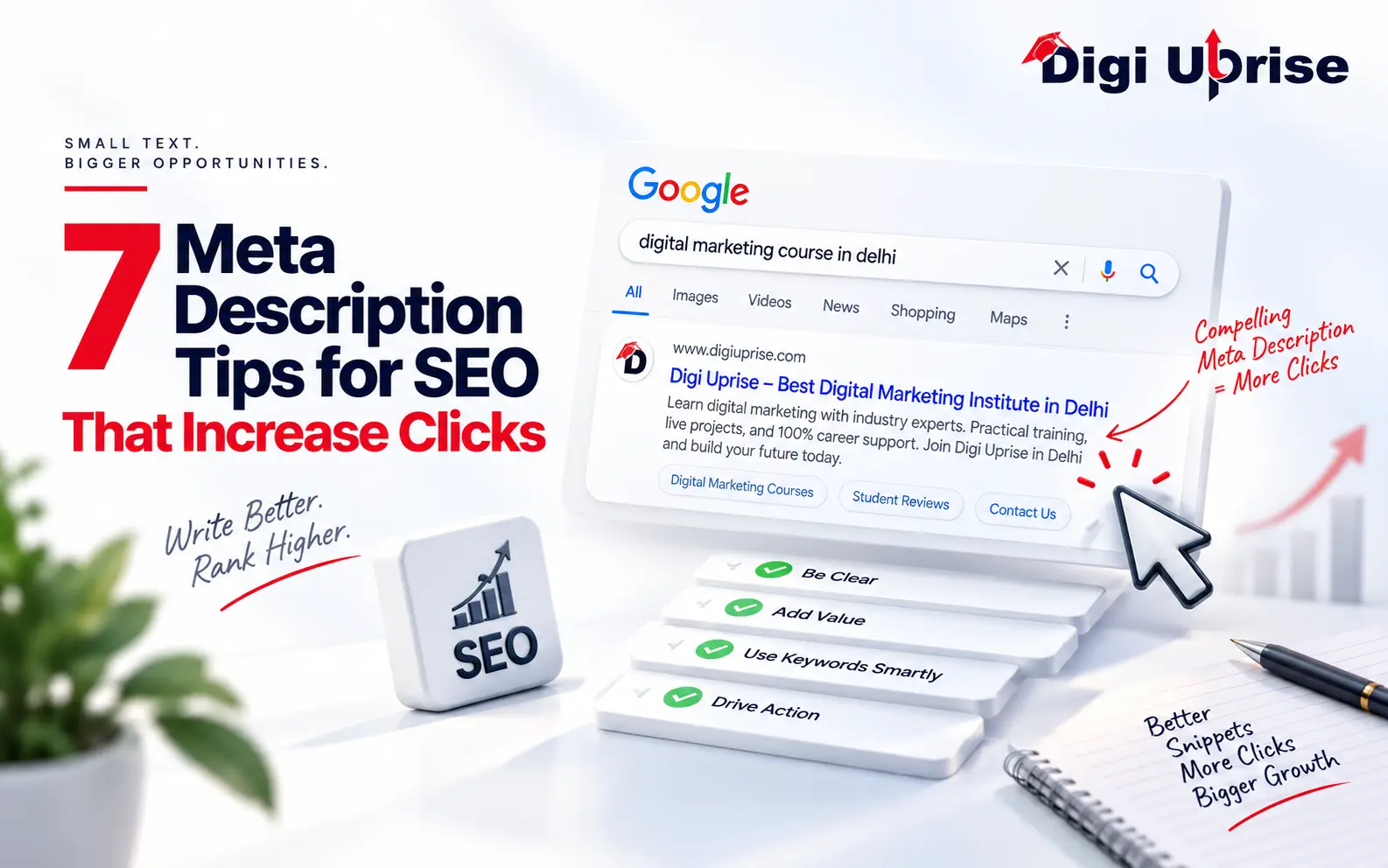
A meta description appears in the search snippet underneath the title. But Google doesn’t necessarily use the description that you have given.
It may pull content directly from the page instead, when it believes that text better matches the search query. Still, a well-written description is worth the effort.
Search intent, the reason behind a search, should guide the description’s focus:
Search Intent | Description Focus |
Informational | Explain the topic |
Commercial | Highlight benefits |
Transactional | Encourage relevant action |
Local | Mention location |
Navigational | Identify the page or brand |
Matching search intent makes the result easier to understand, and the description should add information rather than repeat the title.
Key Elements of an Effective Meta Description
A good meta description structure does not have to be overly complex. Its structure is quite simple and goes like this:
- Start with the topic
- Follow up with the benefit
- Close with a natural call to action, such as “Learn more” or “Explore the guide”
This meta description structure works consistently across blogs, service pages, and product pages alike.
Common Meta Description Mistakes to Avoid
This section covers how to refine your descriptions so they accurately reflect the page and match user intent, not just increase keyword volume.
Common mistakes to avoid:
- Keyword stuffing, which decreases readability
- Copying of the descriptions across numerous pages
- False promises regarding what is offered on the page
- Burying the key point behind an unnecessary introduction
Avoiding these issues keeps search listings accurate and genuinely useful rather than just search-friendly.
Conclusion
A meta description is a small but important part of a webpage’s search presence. It gives users context before they click, shaping whether they choose your result at all.
The best meta description tips for SEO focus on relevance, clarity, accuracy, and search intent. Good meta description optimization is not about keyword stuffing; it is about communicating genuine value in limited space.
At Digi Uprise, we help businesses turn tips like these into real search visibility. Start reviewing your important page descriptions today, and follow Digi Uprise on Instagram and YouTube for more practical SEO insights.
Frequently Asked Questions
1. Does Google always show the meta description?
No. Google can replace it with content from the page when it believes another section better matches the search.
2. Can meta descriptions improve rankings?
Although they are not directly involved with the ranking process, an appropriate snippet will make your search results more attractive and increase clicks.
3. Should every page have a different meta description?
Yes, of course. This way, all pages will be able to provide information about their own topics. You can follow the same basic format on all pages.
4. Can keywords be repeated in a meta description?
It should be avoided. Use the primary keyword naturally, and prioritize readability over repetition.
5. Are meta descriptions useful for ecommerce pages?
Yes. Product and category descriptions give shoppers useful context before they click and help differentiate similar results.