
- September 19, 2026
Internal Link Sculpting: Practical SEO Guide 2026
Share with Friends :

Table of Contents
As your website grows, it can become harder for search engines and users to understand which pages are most important. A well-planned internal linking structure can help make those relationships clearer. Internal link sculpting addresses this by creating a logical structure that connects related content and makes important pages easier to discover.
Internal link sculpting is the practice of strategically linking related pages within your website to improve navigation, help search engines discover content, and clarify the relationships between important pages.
At Digi Uprise, this is one of the first structural fixes we walk students through, because when done right, it gives structure to your content and makes it easily understood by search engines.
What Is Internal Link Sculpting?
The term has a messy history. Back in the mid-2000s, “PageRank sculpting” meant adding a rel=”nofollow” tag to internal links you didn’t want passing authority, like links to a privacy policy, so that the rest of your link equity would concentrate on your money pages.
This practice fell out of favor over a decade ago. In the mid-2000s, SEOs experimented with rel=”nofollow” on internal links to try to control how PageRank flowed through a page. Google later clarified that this approach did not redistribute the PageRank that would otherwise have flowed through those links. As a result, using nofollow specifically to sculpt internal PageRank is not an effective strategy.
Today, link sculpting includes:
- Which pages you link to from your strongest and most relevant pages
- How many links point to a given page, and from where
- The anchor text you use
- How deep a page sits in your site’s click structure
- Topic clustering and siloing of your content
Think of it not as a pipe you want to dam, but as a map where you draw lines to ensure the most vital locations are easiest to reach. The focus is not on blocking access to pages but on making sure the pages that matter most are easiest to get to. That is the difference between modern and old-school link sculpting.
Why Internal Link Structure Still Matters for SEO
Search engines use internal links to discover pages and understand the relationships between different pages on your site. Pages that are difficult to reach through your site’s internal links can be harder for users and search engines to discover. Important pages should be connected through relevant internal links rather than left isolated, even if the content itself is excellent.
Internal linking also helps with:
- Crawl Efficiency: An organized link structure makes the process of crawling your pages easier.
- Topical Relevance: Related articles linking to one another help engines understand how your content connects.
- User Navigation: Relevant internal links help visitors discover useful information and move naturally between related pages.
None of this requires blocking or hiding links. It requires being deliberate about the ones you add. A logical internal linking structure can make your website easier to navigate and help search engines discover and understand your content, not because of any single trick, but because both users and search engines can move through it easily.
How to Sculpt Internal Links the Right Way
It takes more than one tip to solve poor link structure. Internal link sculpting is about following certain behaviors consistently across the site to direct authority and focus.
1. Identify Your Priority Pages First
Determine which pages are most important to your business and SEO goals before touching anything else. before touching anything else. These may be pages that generate leads or sales, target competitive keywords, or act as hubs for broader topics, such as a course landing page or cornerstone article.
If you neglect this step, you’ll be reacting to link opportunities rather than following a strategy, and your architecture won’t correspond to your business needs.
2. Build Topic Clusters Around Hub Pages
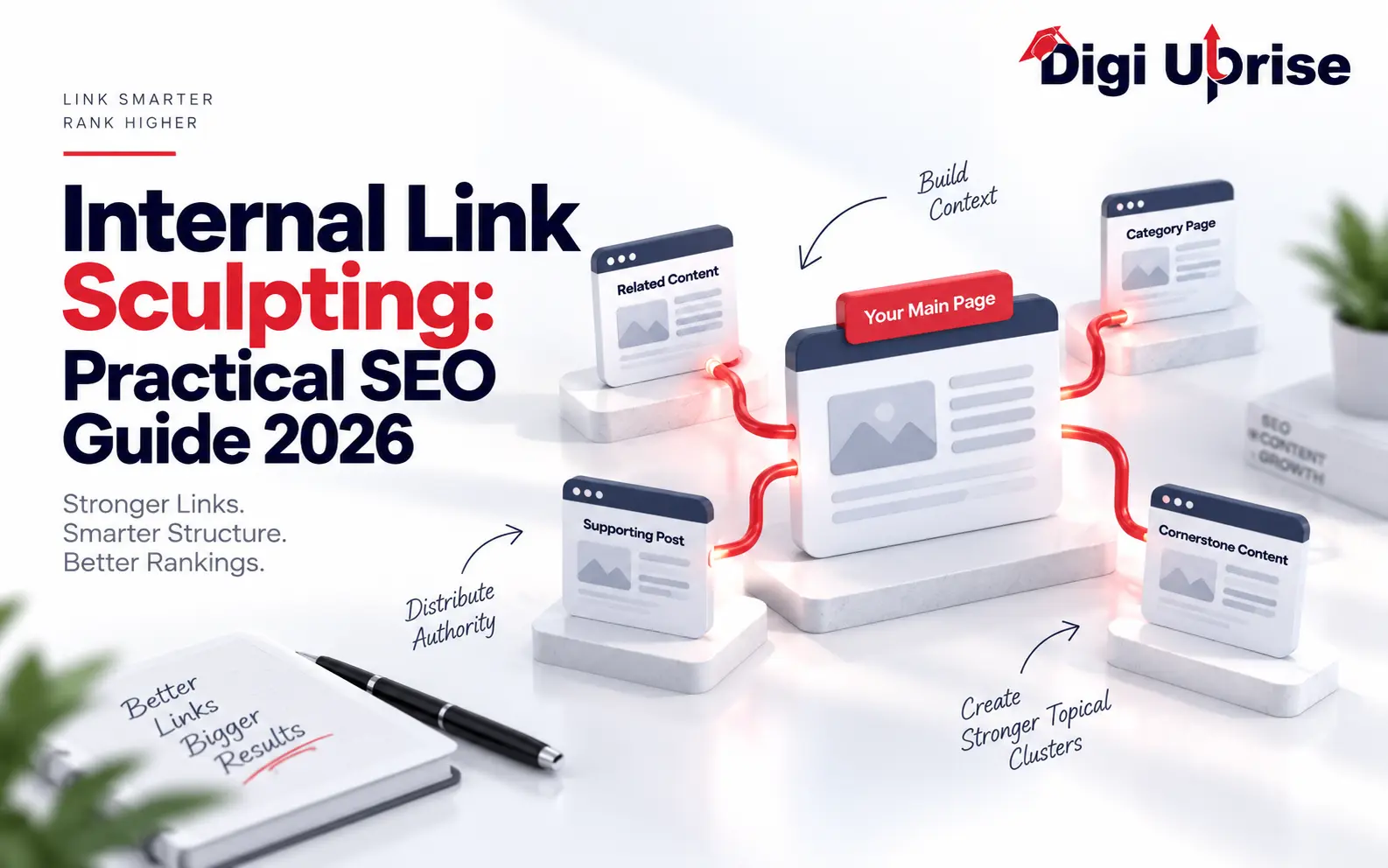
Create clusters of content based on a hub page, and link secondary pages to the hub and to other secondary pages where appropriate. This creates a clearer relationship between related pages and can help users and search engines understand how your content is organized around a topic.
3. Link From Strong and Relevant Pages
Link to important pages from well-connected pages where the connection is useful and relevant. Your homepage, category pages, and established articles may provide useful internal linking opportunities when the linked content is genuinely related.
4. Use Descriptive, Varied Anchor Text
Anchor text helps both the visitor and the search engine know what the hyperlink is all about. Generic phrases such as “click here” provide less context about the destination page. Use descriptive anchor text that naturally explains the destination page. If the same page is linked multiple times, prioritize natural wording rather than forcing keyword variations.
5. Fix Orphan Pages and Reduce Click Depth
An orphan page refers to a web page that has no inbound links to it. Regularly crawl your website to identify orphan pages and other internal linking issues. Also review how easily important pages can be reached from relevant parts of your site. Priority pages should not be unnecessarily buried within the site’s navigation structure.
6. Handle Low-Value Pages Appropriately
Not every page needs to be indexed. For pages that you genuinely don’t want appearing in Google Search, such as certain internal search-result pages, consider whether noindex is appropriate. Google recommends allowing the page to be crawled so it can see the noindex directive.
7. Track the Impact of Your Internal Links
After setting up an internal linking structure, see if it works. After making internal linking changes, monitor whether important pages are being discovered and indexed, and track changes in their organic visibility and performance. Google Search Console can help you monitor search performance and indexing-related information.
This makes internal link optimization an ongoing process. If a page remains difficult to find or perform well after improving its internal links, investigate other factors such as content quality, search intent, technical SEO, indexing, and competition.
Common Internal Link Sculpting Mistakes
Even those who understand the theory revert to their old ways:
- Reviving nofollow sculpting: Using nofollow on internal links to redistribute PageRank is not an effective modern SEO strategy.
- Over-optimizing anchor text: Repeating the same keyword-rich anchor on every link can look manipulative.
- Linking for the sake of a number: Forty scattered links aren’t better than five genuinely relevant ones.
- Ignoring navigation and footer links: Avoid adding large numbers of unnecessary links to sitewide navigation or footers. Keep these areas useful and focused.
- Treating it as a one-time project: Sites grow, and a structure that made sense a year ago may leave new pages disconnected.
The problem with most of these is the same: treating internal linking as a one-time task rather than ongoing maintenance. Auditing your link structure alongside content updates prevents these problems from returning.
Final Thoughts
Internal link sculpting within the site structure for 2026 is not about using any of the old nofollow techniques at all but about creating relevance and structure. Select the important pages of your site, connect them via hubs, write the right anchor text to describe the target page, and audit as your website grows. That is all there is to it.
If you want to go deeper on how internal linking fits into a broader SEO strategy, Digi Uprise covers this kind of practical, hands-on approach in its training content. Follow Digi Uprise on Instagram and subscribe to YouTube for more breakdowns of SEO, digital marketing, and AI-powered marketing skills you can actually put to use.
Frequently Asked Questions
1. Do nofollow internal links still help concentrate PageRank?
No. Using nofollow on an internal link does not redistribute the PageRank that would otherwise have flowed through that link to other links on the page.
2. How many internal links should a page have?
There’s no fixed number. Focus on linking wherever it’s genuinely useful to the reader and relevant to the topic.
3. What's the difference between internal link sculpting and a content silo?
Siloing is where you organize your content by grouping it according to certain topics. A content silo organizes related pages around a specific topic, while internal link sculpting focuses on strategically connecting pages through internal links. The two approaches can overlap, but they are not the same thing.
4. Should I noindex or nofollow pages I don't want ranking?
Use noindex when you want a page excluded from Google Search. nofollow serves a different purpose and tells Google not to follow a link. They should not be treated as interchangeable directives.
5. How often should I audit my internal linking?
Review your internal linking regularly as your website grows. Quarterly audits can work well for many sites, while larger or frequently updated websites may benefit from more frequent checks.