- September 25, 2026
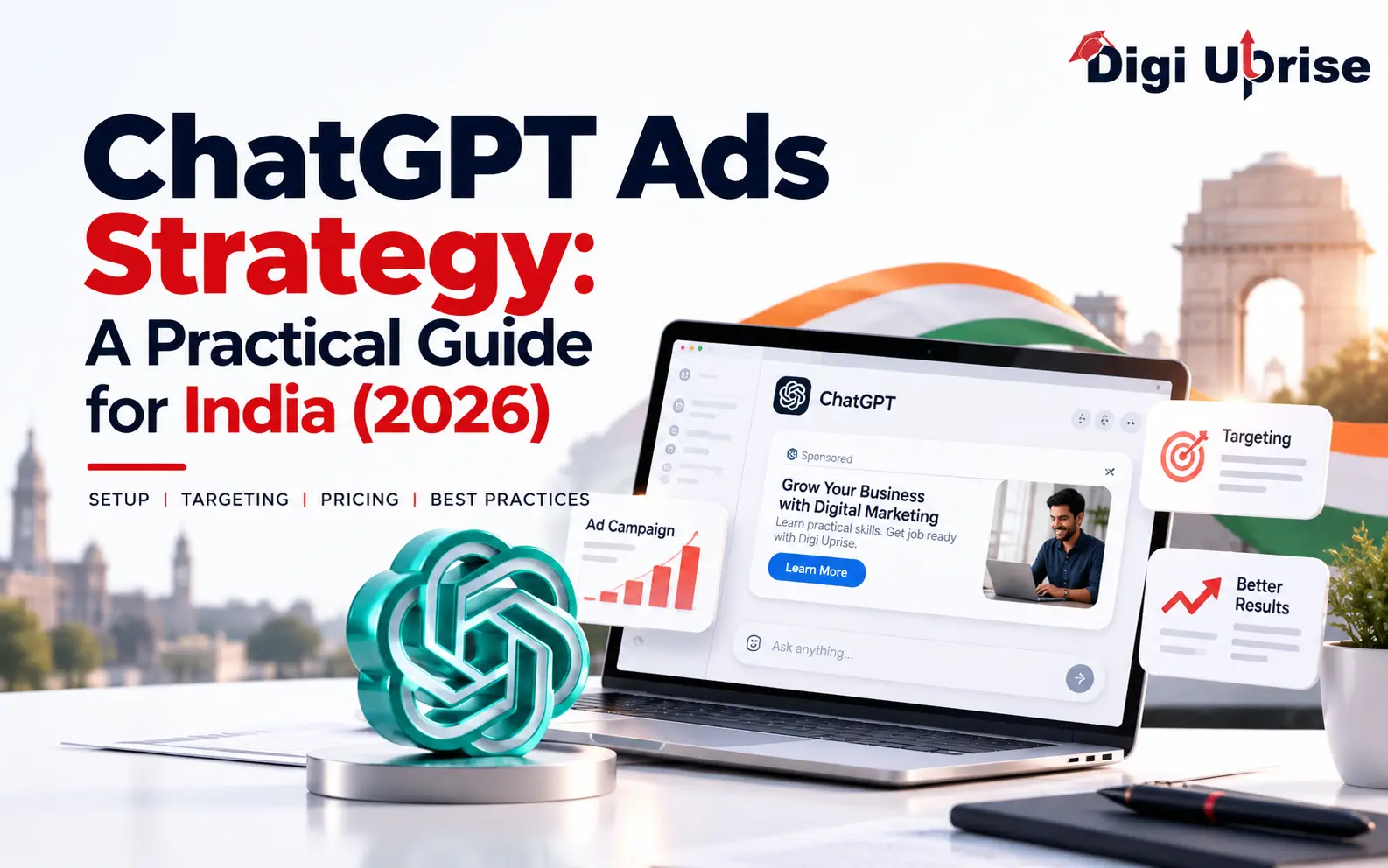
ChatGPT Ads Strategy: A Practical Guide for India (2026)
Share with Friends :
Table of Contents
Real advertisements have started appearing in the responses of ChatGPT, and Indian brands are still just beginning to get access to place their ads. A good ChatGPT ads strategy starts with OpenAI’s self-serve Ads Manager, which is now available to eligible advertisers in India. This is changing the way Indian marketers approach AI-powered search advertising.
OpenAI announced on August 31, 2026, that self-serve ChatGPT Ads access was expanding to India, allowing eligible Indian advertisers to purchase and manage campaigns directly through Ads Manager. With self-serve access now available in India, Indian businesses can manage ChatGPT advertising campaigns directly through Ads Manager.
How ChatGPT Ads Strategy Differs From Search and Social Ads
In search advertising, your ad competes for a query; in social advertising, your ad competes for attention on a scroll. In ChatGPT, your ad competes for relevance within a conversation. When the consumer’s conversation turns toward anything related to commerce, like food kits or business software solutions, the AI system by OpenAI connects it with live campaigns run by advertisers and surfaces the most relevant ad along with the response.
For Indian marketers still mapping out a ChatGPT ads strategy, this distinction matters in three ways:
- Intent signals come from dialogue, not just keywords. A user might ask several follow-up questions before an ad becomes relevant.
- Trust is fragile. Because the sponsored listing sits next to an AI-generated answer the user already trusts, weak or irrelevant creative stands out badly.
- Eligibility is tiered. Your target audience in India consists mostly of casual and free-tier users and not power users in paid tiers.
How ChatGPT Ads Targeting Works
ChatGPT Ads are selected using multiple relevance signals, including the context and intent of the current conversation, the ad’s landing page, title, copy, advertiser-provided context hints, and, when ads personalization is enabled, select signals from a user’s broader ChatGPT experience. Advertisers do not receive users’ private conversations or personal details.
Before you plan a budget, it helps to know exactly who can see your ad in the first place:
ChatGPT Plan | Ads Shown? |
Free | Yes* |
Go | Yes* |
Plus | No |
Pro | No |
Business | No |
Ad availability depends on the user’s region and current OpenAI eligibility rules. Accounts identified as belonging to users under 18 do not receive ads.
Practically, this means you’re not building granular audience lists the way you might on a traditional ads platform. Instead, advertisers can provide context hints describing the conversations, topics, or keywords where their products or services may be relevant. These hints help guide ad matching but are not exact-match keywords and do not guarantee delivery in specific conversations.
Pricing and Bidding: What ChatGPT Ads Cost in India
ChatGPT Ads supports CPC (cost per click), CPM (cost per 1,000 impressions), and conversion-focused campaigns. The actual amount an Indian advertiser pays depends on the campaign objective, bidding method, competition, and ad delivery.
For advertisers using INR billing, the current minimum daily campaign budget is ₹725. This is a minimum campaign budget, not a guaranteed daily spend or a fixed advertising cost.
For a new campaign, Indian advertisers can start with a daily budget, monitor delivery and performance, and adjust spending based on results. OpenAI’s current Ads Manager guidance recommends using a daily budget when you are new to the platform so you can monitor campaign performance before committing to a campaign-total budget.
Building Your ChatGPT Ads Strategy Step by Step
Most Indian advertisers overthink the first campaign and underthink the tracking setup. Here’s a simple five-step sequence to get your first test live without wasting budget.
- Define one commercial use case first. Identify a single product or service in which Indian users will be making inquiries for comparisons and recommendations via ChatGPT.
- Write for the conversation, not the query. Draft ad copy that reads naturally if it appeared after a multi-turn discussion, not a single search term.
- Set up conversion tracking before you launch. Ensure you understand the process through which the ChatGPT Ads Manager sends click and conversion data to your analytics stack.
- Run a small, India-focused test first. Given how recently self-serve access opened in India, start with a controlled rupee budget before increasing spend.
- Review creative and campaign performance regularly, and test different ad variations based on the results.
None of these steps need a big team or a big budget to start, just a clear offer, tight tracking, and a willingness to iterate weekly.
Where ChatGPT Ads Fit Alongside Your Other Channels
There is no need for the ChatGPT ads strategy to replace your current search or social budget allocation. This is a new placement platform within an overall set of AI-powered search advertising tools that include Google AI Overviews and other answer engines, which Indian marketers have been dealing with successfully. A strong landing page still matters because your landing page, ad title, ad copy, and advertiser-provided context can contribute to how your campaign is matched and evaluated. Consider it another channel within your digital marketing mix rather than a separate channel to be developed from scratch.
Conclusion
Three elements make up an effective ChatGPT ads strategy in the Indian market by 2026: appreciating that your ad is being placed in the context of a conversation and not a search, being respectful of the tier system of audience reach limits, and testing creative variations for relevance and performance rather than relying on bids alone.
The platform is moving fast, and India is one of its newest markets, so the strategy that works this quarter may need adjusting next quarter. Digi Uprise will keep covering these shifts as they happen.
Follow Digi Uprise on Instagram and subscribe to our YouTube channel for practical, no-fluff breakdowns of AI search, SEO, and digital marketing as the landscape keeps changing.
**Source note: ChatGPT Ads features, eligibility, pricing, campaign objectives, and minimum budgets can change as OpenAI continues to expand Ads Manager. This guide reflects OpenAI’s advertising documentation available in September 2026, including the current INR minimum daily campaign budget.
Frequently Asked Questions
1. Can Indian businesses buy ChatGPT ads directly?
Yes. Eligible Indian advertisers can purchase ChatGPT Ads directly through the self-serve Ads Manager available in India. OpenAI announced the expansion of self-serve access to India on August 31, 2026.
2. Do ChatGPT ads look different from a normal answer?
Yes. Ads appear as clearly labeled “Sponsored” listings that are visually separated from ChatGPT’s organic answer, and advertiser payments never influence the model’s response itself.
3. Which ChatGPT users actually see ads?
Ads may appear for users on ad-supported ChatGPT plans. OpenAI currently states that ads are not shown to users on Plus, Pro, or Business plans, or to accounts identified as belonging to users under 18. Availability can vary by region and OpenAI’s current eligibility rules.
4. Is ChatGPT ads targeting based on my personal chat history?
Advertisers do not receive users private conversations or personal details. ChatGPT Ads can use the context and intent of the current conversation and, when ads personalization is enabled, select signals from a user’s broader ChatGPT experience to determine ad relevance.
5. What's the minimum budget to start advertising on ChatGPT?
The current minimum daily campaign budget for advertisers using INR is ₹725. This is a minimum budget requirement, not a guaranteed advertising cost. Actual campaign costs depend on the campaign objective, bidding, competition, and ad delivery.