
- October 31, 2026
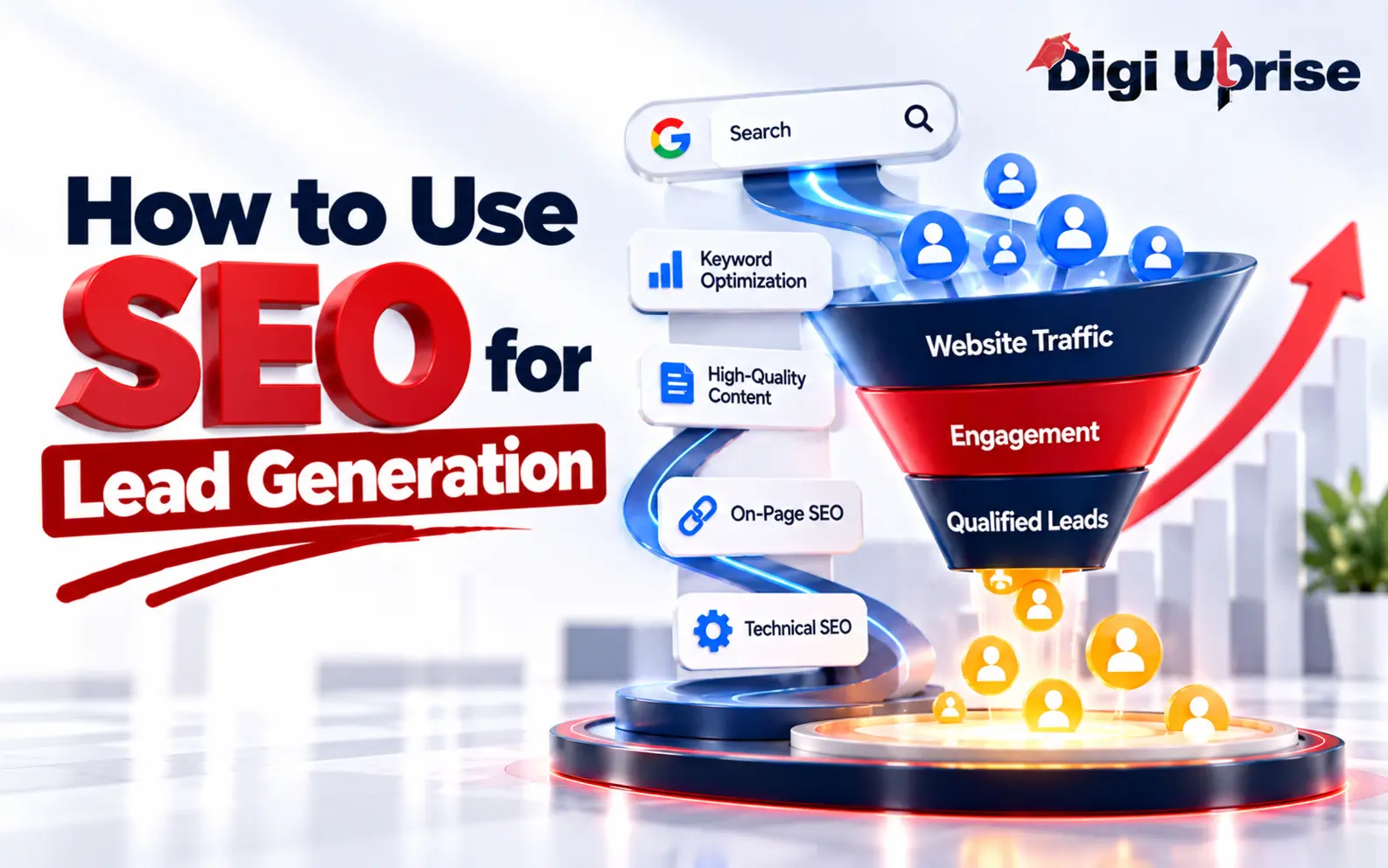
How to Use SEO for Lead Generation
Share with Friends :

Table of Contents
Companies take their time creating websites and publishing content but have trouble getting regular inquiries. The reason may not be low traffic on the website. Sometimes the website receives visitors who are not ready to purchase yet or do not see how to proceed further. Understanding how to use SEO for lead generation helps businesses attract people who are actively searching for their products or services and guide them towards meaningful actions such as submitting enquiries, booking consultations, or making purchases.
SEO allows companies to reach people who are looking for certain information, goods, or services. Having correct keyword research and useful content makes organic searches a good source of potential customers.
1. What Is SEO Lead Generation and How Does It Work?
SEO lead generation means getting relevant people to your site through organic search and nudging them to act, whether that’s filling in an enquiry form, booking a consultation, or calling you.
Paid ads stop the moment you stop paying. Organic visibility doesn’t work that way. If your page answers someone’s question well, it can keep bringing in people who already care about the topic.
Say someone in Delhi searches for a digital marketing course in Delhi. They’ll probably open a few institute websites and compare curriculum, class format, and hands-on training. The site that explains all this clearly and makes enquiring easy has a real shot at winning that person.
Think of it as four steps:
- Attract: get found by the right searchers.
- Inform: answer their questions honestly.
- Engage: make your services and next steps easy to spot.
- Convert: give interested visitors a simple way to contact you.
A successful SEO lead generation strategy doesn’t end when someone visits your website. It connects every stage of the customer journey, from discovering your business through Google to exploring your services, evaluating your credibility, and finally submitting an enquiry. Each page should have a clear purpose and guide visitors towards the next relevant step.
More traffic doesn’t automatically mean more business. Ten visitors who need what you sell are worth more than a thousand who don’t.
2. Find Keywords That Signal Buying Intent
Good keyword research starts with one question: what is this person trying to do? Popularity alone is a poor guide.
Compare “what is SEO” with “SEO services for a small business.” The first person wants an explanation. The second is probably shopping around for help. Both are worth targeting, but they’re at very different points in their decision.
A handy way to sort your list:
- Informational: people looking for guides, explanations, or answers.
- Commercial Investigation: people comparing providers, tools, or options.
- Transactional: people ready to contact, buy, or sign up.
Long-tail phrases help too. “SEO services for local businesses in Delhi” tells you far more about the searcher’s need than plain “SEO” does.
Tools such as Google Keyword Planner can help estimate keyword search demand and advertising competition, while Google Search Console shows the actual search queries, impressions, clicks, and click-through rates for your website. You can also use dedicated SEO tools to research organic keyword difficulty and competing pages. Then do something tools can’t: type the keyword into Google and read what comes up. The results show what people expect to find, and that tells you what your page needs to deliver.
Once you identify relevant keywords, group them according to search intent and map them to suitable website pages. Informational keywords can target blog articles, commercial keywords can support comparison and service pages, and transactional keywords should lead to pages with clear enquiry or purchase options. This prevents multiple pages from competing for the same search intent.
3. Write Content That Turns Readers into Leads
People contact businesses they trust, and content is often where that trust starts. Good content answers real questions, walks through options, and helps someone make a decision. Depending on your business, that might be blog posts, detailed service pages, comparison guides, case studies, or an FAQ section.
A digital marketing agency, for instance, could write about how local SEO brings in nearby customers, then link to its local SEO service page for readers who’d rather hire help. Information first, offer second.
Educational institutions can also use SEO to attract prospective students by publishing course guides, answering career-related questions, and creating informative pages that explain their training programmes.
A few habits that help:
- Give the main answer near the top.
- Use clear headings and short paragraphs.
- Add practical examples.
- Link to related guides and service pages.
- End with a call to action that suits where the reader is.
One warning: don’t publish five near-identical pages just to target five slightly different keywords. Every page needs its own job.
4. Make Your Landing Pages Do the Work
Imagine someone finds you through a good article and leaves without a word because they couldn’t see what to do next. It happens all the time. That’s why optimizing for leads means thinking about the visitor, not only the search engine.
A landing page should say what you offer, who it’s for, and what to do next, all within a few seconds. The headline should match what the visitor expected when they clicked.
What to get right:
Clear headlines
State the main benefit plainly. Skip the big promises.
Relevant calls to action
“Request a Consultation” or “Send an Enquiry” works fine.
Short forms
Ask only what you need to reply. Every extra field costs you a few people.
Mobile usability
Check that text reads easily, buttons are tappable, and the form actually submits on a phone.
Speed
Slow pages and technical glitches send people away.
Match the page to the search intent as well. Someone looking for a how-to guide won’t appreciate landing on a hard sales pitch.
If a page gets decent organic traffic but few enquiries, look at the copy, the call to action, the form, and whether the page really matches what visitors came for before changing anything.
5. Local SEO for Nearby Customers
If you serve a particular city or area, local SEO can put you in front of people searching close to you. Many of these searches include a place name, like “digital marketing institute in Delhi,” though Google can often tell a search is local even when no location is typed.
Begin with your Google Business Profile, if you’re eligible for one. Keep your name, address or service area, phone number, categories, and hours accurate. Upload real photos. Ask happy customers for honest reviews, but don’t offer anything in return for them.
Your website should also say where you work and what you offer. Location pages are fine when they carry genuine local detail. Copying the same text and swapping the city name isn’t.
A training institute, for example, might publish a page covering its courses, learning options, address, and how to enquire, written for students in its area.
Consultants, clinics, schools, home-service providers, and similar businesses tend to benefit most. Keep expectations realistic, though. Local rankings depend on relevance, distance, and prominence, so a tidy profile improves your odds without promising a specific position or number of leads.
6. Technical SEO and Internal Links
Great content can still go nowhere if search engines can’t reach it or visitors get lost on your site.
Check that your important pages can be crawled and indexed. Look for broken links, mobile problems, HTTPS, and slow pages. Google Search Console flags indexing issues and shows which queries bring people in.
Businesses should also check Core Web Vitals, mobile usability, structured data where relevant, and important conversion pages. Technical SEO helps search engines understand and access website content, while a reliable website experience helps visitors navigate the site and complete enquiry actions.
Internal links matter just as much. They keep visitors moving through your site instead of sending them back to the search results. A keyword research article might link to your on-page SEO guide, which in turn links to a service page. That path takes someone from learning about a problem to considering a solution.
Trust comes from accuracy, too. Explain technical topics correctly, keep service details current, and back up big claims with evidence.
Technical fixes make a site easier to use, but they won’t create enquiries by themselves. They need good content, a clear offer, and a simple way to convert.
7. Measure Leads and Keep Improving
You can’t improve what you don’t track. Google Search Console shows impressions, clicks, click-through rates, and the queries behind them. Google Analytics 4 shows what visitors do and can record the events and conversions you set up.
Go beyond raw traffic. Watch:
- Organic visits to key landing pages.
- Enquiry form submissions.
- Tracked calls and other contact actions.
- Conversion rate from relevant organic visits.
- Lead quality, meaning how many enquiries turn into customers.
The conversion rate formula is simple: conversions divided by relevant visits (or users, depending on how you measure), multiplied by 100.
Then read the patterns. If a blog draws visitors but no enquiries, ask whether those readers are your audience and whether the page offers a next step. If a service page gets impressions but few clicks, rewrite its title and description. If people arrive and leave quickly, look at the page experience and whether the content matches the search.
Look at trends over weeks and months, not daily wobbles. SEO conversion optimization is a loop of spotting problems, testing sensible changes, and learning from the results.
Conclusion
Ranking higher is only part of the job. The businesses that actually get enquiries from search tend to do a handful of things well. They know what their customers type into Google. They publish pages that answer those questions properly. They give visitors an obvious next step, and they check the numbers to see what’s working.
If you serve a specific area, local visibility deserves a place on that list too.
Don’t chase every visitor you can get. Chase the ones who need what you offer, then make it painless for them to reach you. Results will depend on your competition, your site, and how much demand exists, so plan on reviewing and tweaking as you go rather than setting things up once and walking away.
If you want to develop practical skills in SEO, content marketing, keyword research, and website analytics, Digi Uprise is a digital marketing institute you can explore. Learning through practical projects and real-world marketing activities can help you understand how search visibility translates into business growth.
Frequently Asked Questions
1. How does SEO help with lead generation?
SEO helps businesses attract potential customers who are actively searching for relevant products, services, or information. By targeting the right keywords, publishing useful content, and optimizing landing pages, businesses can increase organic visibility and encourage visitors to submit enquiries, request consultations, or make purchases.
2. How long does SEO take to generate leads?
SEO lead generation takes time because results depend on website authority, competition, keyword difficulty, content quality, and technical performance. Some websites may see improvements within a few months, while others require a longer period of consistent optimization.
3. Which SEO strategies work best for leads?
The most effective SEO strategies for lead generation include targeting commercial and transactional keywords, optimizing service landing pages, publishing helpful content, implementing local SEO, and improving website conversion rates. Businesses should also track enquiries and lead quality to understand which pages generate meaningful results.
4. Can small businesses get leads from SEO?
They can, and being small can help. You can’t outspend a big brand on ads, but you can write about a narrow topic more usefully than they do. Someone searching “SEO help for a dental clinic in Delhi” is far more likely to contact you than someone searching “SEO,” and far fewer companies are competing for that phrase.
5. How do I measure SEO leads?
Set up Google Search Console and GA4 first, since both are free. Search Console tells you which searches bring people to your site. GA4 tells you what they do afterwards, but only if you’ve set up events for things like form submissions. Then look beyond the numbers. Ask your team how many of those enquiries were real prospects, because a hundred bad leads are worth less than five good ones.
6. Can beginners learn SEO for lead generation?
Yes, and you don’t need to learn everything at once. Pick a small website, even your own or a friend’s, and try the basics on it: find a few keywords, rewrite a page, and see what happens in Search Console a few weeks later. That hands-on loop teaches more than reading theory. If you’d prefer a guided path, Digi Uprise is a digital marketing institute you could look at.