
A Quick Guide to Key SEO Terms
Regardless of whether you’re a beginner, a business owner, or someone honing their digital knowledge, understanding common SEO terms is key to your success. SEO can seem overwhelming and complicated at first glance, but once you understand the terminology behind SEO, everything becomes simpler- optimizing content, improving ranking, and talking to professionals about the results you get.
At Digi Uprise, we believe every creator, professional and brand should know the fundamentals of SEO. For this reason, we have taken the time to compile the 21 SEO terms everyone should know in the year 2025, and we have put it all down in simple, practical-to-read language to ensure that you can strengthen your digital presence.
Here Is the List of Essential SEO Terms
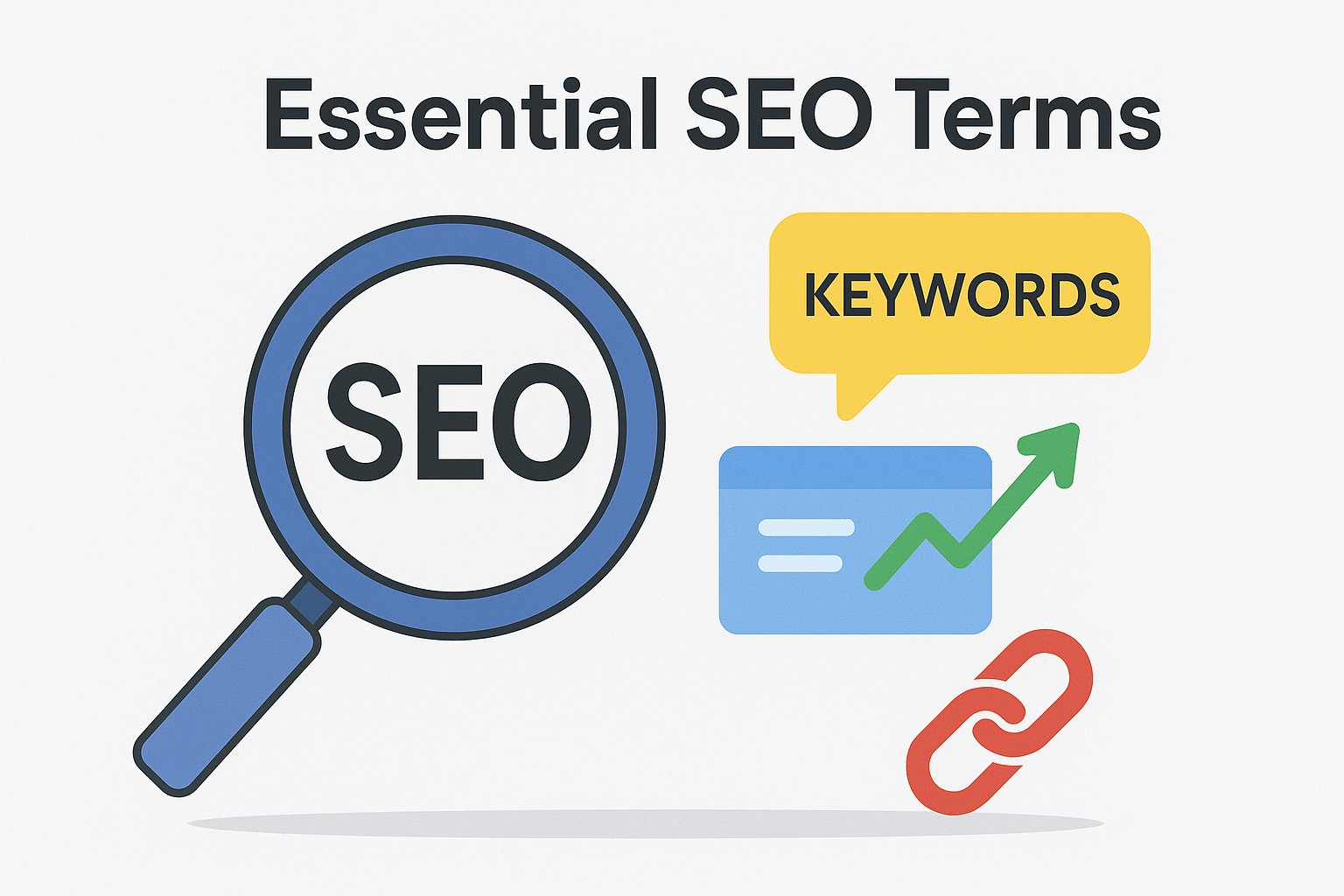
Once you learn the key SEO Terms that are used in the SEO space, understanding SEO becomes significantly more manageable. This list can help novices and those who need a somewhat refreshed understanding to get acquainted with the most important concepts tied to improving search visibility, increasing traffic, and enhancing online authority.
1. SEO (Search Engine Optimization)
SEO, short for Search Engine Optimization, refers to enhancing your website so that it ranks higher in search engines like Google. This could mean better technical setup, optimizing your content, and increasing your authority overall. This is the basis for all of the other SEO Terms you will come across.
2. Keywords
Keywords are what people type into search engines, which help Google understand what your page is about. They can be short (“digital marketing”) or long-tail keywords (“best digital marketing tools for beginners”).
3. SERP (Search Engine Results Page)
SERP is the page of results you see after you search on Google. It is the collection of organic results, ads, featured snippets, knowledge panels, maps, and so on. Many of the SEO-related terms relate to enhancing your visibility on the SERP.
4. Title Tag
A title tag is the clickable result headline you see on search results. It gives both search engines and the user an idea of what your page is about. A strong title tag can improve both your ranking and CTR.
5. Meta Description
A meta description is the short summary you see on the SERP below your title tag. It does not have a direct impact on your ranking, but it can improve your CTR and user engagement.
6. On-Page SEO
On-page SEO relates to optimizing specific elements on your web page, including: content, headers, URLs, internal links, images, keywords, and formatting built into your page templates.
7. Off-Page SEO
Off-page SEO refers to the actions you take outside of your own website to improve rankings, primarily backlinks, brand mentions, PR, and developing trust. Off-page SEO is demonstrating to Google that your website is reputable.
8. Backlinks
Backlinks are those precious links that come from other websites and point to your website. Backlinks are “votes of confidence” for Google to determine the authority of your website. High-quality backlinks are necessary to rank.
9. Anchor Text
Anchor text is the clickable text that is used in hyperlinks. Using descriptive and relevant anchor text helps Google to understand what that linked page is about. Avoid keyword stuffing anchor text, as it may affect SEO.
10. Organic Traffic
Organic traffic is defined as visitors that reached your website from organic search results that are unpaid. Growing organic traffic is the main target of a majority of SEO strategies.
11. Ranking
Ranking describes your website’s position on the SERP based on specific keywords. The closer you are to the top, the more traffic you will receive. And many factors that will play a role in ranking such as backlinks, the quality of content, user experience, etc.
12. Bounce Rate
The bounce rate gives insight into how many users leave without action. Although not always a bad metric, a high bounce rate will indicate that the page isn’t relevant or offer a good user experience.
13. Crawling
Crawling is when the bots scan your website for content, pages, or updates. If a bot can’t use your web site for crawling, it can’t rank. This is one the most important technical SEO terms of SEO because of this.
14. Indexing
Indexing is when Google saves your web pages in its database. If a page is not indexed, it will never be displayed in search engine results pages. Tools like Google Search Console will show if a web page is indexed.
15. Alt Text
Alt text is provided to show Google what an image means. This is also used to improve user experience for individuals with disabilities. Alt text can improve the visibility of an image in results pages just like a site.
16. Schema markup
Schema markup is structured data that you add to a webpage that helps search engines better understand the content of your site. Schema markup will allow rich snippets such as FAQs, reviews, star ratings, recipes, and more.
17. Robots.txt
Robots.txt is a file that tells search engine bots what pages to crawl and what pages to ignore. This works great if you want to block duplicate pages, private pages, or pages that you are testing.
18. Sitemap (XML Sitemap)
An XML sitemap is a list of all the important pages on your website. Once created, it will help search engines crawl, index, and fetch your web pages. This type of sitemap is particularly important for large sites, e-commerce stores, or new sites.
19. Canonical Tag
A canonical tag tells Google which individual copy of the page is the original if you have multiple pages of similar or duplicate content. This is effective in preventing the dilution of ranking signals.
20. CTR (Click-Through Rate)
CTR is how many people actually click your result after seeing it on the search results page (SERP). If your visitors click-thru, this tells Google that users found your result useful and that you may have an opportunity to rank better.
21. Search Intent
Search intent is the purpose behind a user’s search.
There are four primary types:
- Informational (seeking answers)
- Navigational (wanting a brand or page)
- Transactional (wanting to buy)
- Commercial (wanting to compare options)
Matching your content to the corresponding intent is one of the most essential SEO terms for ranking success.
How Understanding These SEO Terms Improves Your Strategy
Understanding these SEO terms helps inform your approach to your website logically versus with a guessing mindset. When you know the right SEO Terms, you’ll understand better how Google operates, why pages rank and what changes yield actionable results.
When you understand crawling and indexing, you can correct technical issues.
When you understand keywords, title tags, and on-page SEO, you can develop better content.
When you understand off-page SEO and backlinks, you can increase your authority.
When you use schema, alt text, and sitemaps, you can provide structure that is friendlier for search.
All of this is designed to create better visibility, traffic, and conversions.
Conclusion
The first thing you must do to develop a good SEO strategy is to learn the terminology of SEO. You will want to know these 21 SEO Terms no matter if you are optimizing your content, fixing technical issues, or establishing authority for your website. SEO continues to change, but the fundamentals of these 21 SEO Terms will help you adapt more quickly, make informed decisions, and grow your visibility online in 2025 and beyond.
If you want more tips, easy guides, and daily updates on digital marketing, follow Digi Uprise on Instagram.
FAQs About SEO Terms
1. What are the most basic SEO Terms to understand for someone who is a beginner?
Begin with keywords, SERP, crawling, indexing and on-page SEO, these will help you build your foundation for SEO.
2. Are technical SEO terms complicated?
Not all of the time as some SEO terms like sitemap, robots.txt, and canonical tags sound complicated, but they are simple when explained with basic examples.
3. Are tools needed to use SEO terms?
Some tools like Google Search Console, Google Analytics, SEMrush, or Ahrefs are tools that will help get started with the job of SEO.
4. Do all SEO terms directly affect rankings?
Some terms, like schema, alt-text, or metadata, don’t fully affect the way your content ranks; instead, they aid the search engine in understanding your content and improving ranking indirectly.
5. After learning these SEO Terms, how long will it take to see SEO results?
Typically, you’ll begin to see results within 3 – 6 months depending on competition, quality of content, and the health of the site.
