

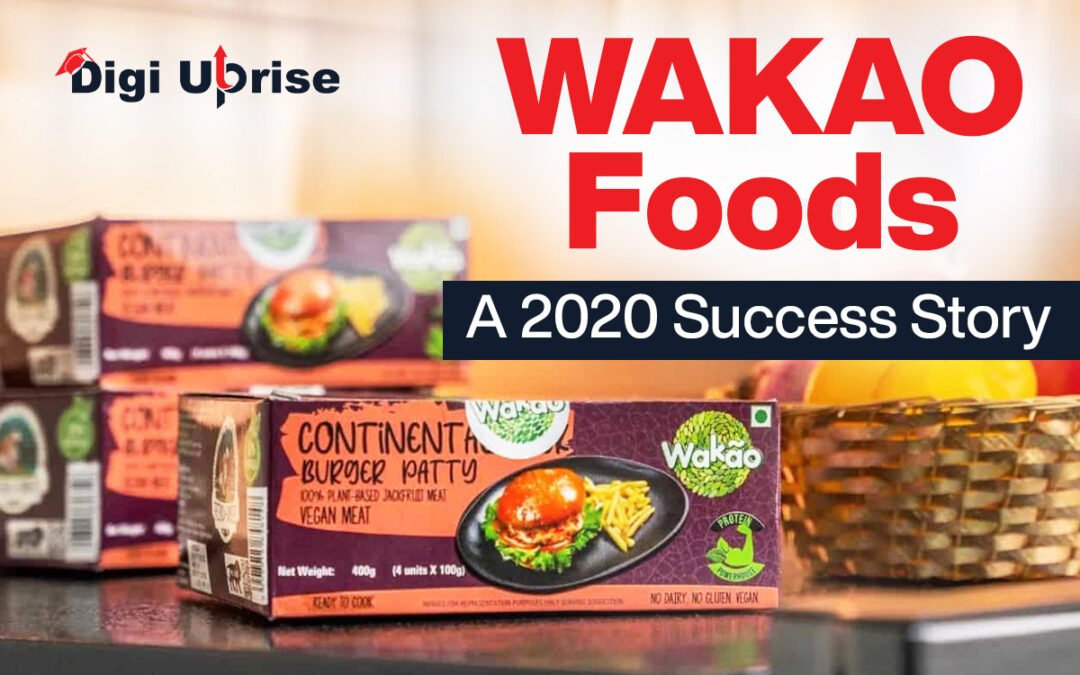
WAKAO Foods: Turning Sustainability into Success
The plant-based food revolution is changing how we think about food, and WAKAO Foods is leading this change in India. This is not just another story about a vegan brand trying to recreate the experience of meat. Instead, it’s about two entrepreneurs who thought about jackfruit in a new way and created something amazing from nothing.
The Beginning: From Problem to Opportunity
Sairaj Dhond and Neel Sheth did not build WAKAO Foods with a big dream of shaking up the food industry. In fact, just like many amazing ideas, theirs tackled a simple observation and a frustrating problem. Both founders were experimenting with plant-based diets and quickly realized something vegetarians and vegans in India know too well: the options are very limited, not particularly exciting and usually disappointing.
Instead of trying to import solutions from the West, or trying to get some sort of entirely synthetic food equivalent, they turned to jackfruit. Yes, jackfruit is not new in Indian cooking. People have been cooking with it for generations.
Understanding the Jackfruit Advantage
Let’s discuss why jackfruit became the star of this show. When you are developing a plant-based meat alternative you have several challenges. The texture must feel appropriate. The flavour has to be satisfying and the nutrition needs to be adequate.
Jackfruit hits all these marks. Its fibrous texture naturally imitates pulled meat when cooked appropriately. Unlike soy or other processed plant-based alternatives, jackfruit has this structure innately that does not require the amount of processing to achieve a meat-like consistency.
Then, there was the nutritional profile, which offered an added dimension to their value proposition. Jackfruit can bring fiber, vitamins, and minerals without the cholesterol and the large environmental footprint of animal products.
Building the Product Line: More Than Just One Idea

WAKAO Foods began with the understanding that success would not come from a single product. They needed variety; they needed flavors not just of the Indian palate but also flavors appreciated around the world.
Their approach to development provided a lot of thoughtfulness here:
Ready-to-Eat Range
- Jackfruit biryanis that matched the nuance of traditional recipes.
- BBQ-style for the people who love the flavor of grilled or smoked preserved.
- Curry flavors that respected India’s regional home-style cooking.
- Fusions; Mexican and Asian recipes for more adventurous eaters.
Raw Jackfruit Products
- Portioned pre-seasoned for home cooking.
- Portioned marinated for grilling and roasting.
- Completely plain jackfruit bulk for at-home preparation.
The Marketing Genius: Speaking to Real People

Here’s where WAKAO really understood the assignment. They could have filled the role of just another vegan brand preaching to the already converting. Instead, they talked to people. Their messaging never shamed meat eaters or put them on the defensive. Instead, it sparked curiosity.
To the healthy eaters they talked about nutrition, but it was not fundamental or preachy. To people concerned about the environment, they shared sustainability data, but they did not learn strict doom-and-gloom reporting.To the foodies, they emphasized taste and learning how to use the product. This was not about sacrifice, that was about the joy of discovery.
Their digital presence of WAKAO Foods followed suit with relatable messaging to the range of customers and perspectives. It’s not stock photos of perfect vegan meals, it’s real people enjoying the products on social media.
WAKAO Foods gained ₹75 lakh for 21% equity from all three female sharks on Shark Tank India Season 1: Vineeta Singh (SUGAR Cosmetics), Namita Thapar (Emcure Pharmaceuticals) and Ghazal Alagh (Mamaearth).
Thus, WAKAO became the first startup in India to receive investment from all three female sharks.
Distribution Strategy: Placing Products Where Consumers Shop
It doesn’t matter how great your product is if consumers can’t buy it. WAKAO Foods grasped this idea from day one, and this showed through their distribution strategy which was ambitious yet practical.
They started in the e-commerce space. Partnering with BigBasket, Amazon, and other national e-commerce retailers allowed them to cover a huge geographical area with minimal costs and consumers shopping for groceries online would be able to discover WAKAO, read reviews, and purchase.
Ironically, the pandemic accelerated these strategies. As consumers became more accustomed to shopping for groceries online, they became more health conscious, which placed WAKAO Foods in a position to leverage the growing trend in this space.
Challenges and How They Overcame Them
Starting a plant-based food company in India was far from easy for WAKAO.
Supply Chain: Sourcing quality jackfruit consistently was a big challenge. Being seasonal and variable in quality, WAKAO had to build strong relationships with farmers, set quality standards, and educate suppliers. Investing in their own supply chain gave them control.
Consumer Education: Most people only knew of jackfruit as a vegetable for curry. Convincing them it could replace meat required sampling, demos, and informative content.
Price Positioning: Plant-based alternatives are comparatively expensive, and Indian consumers are budget-conscious. WAKAO offered a variety of formats and pack sizes in order to strike a balance between cost and quality standards.
Scaling Production: Many startups fail to retain taste and quality when they go from small-batch to large-scale production. From 2020 to 2024, WAKAO expanded gradually, testing at every turn to guarantee consistency.
Impact and Market Position of WAKAO Foods
The statistics show the triumph of WAKAO, but a greater shift occurred. They not only normalized plant-based eating in a country that continues to consume more meat, while vegetarianism is a social norm,but they also developed a thick and exciting plant-based alternative to meat.
By 2024, WAKAO became the leading jackfruit-based food brand in India, with products available in hundreds of stores in metropolitan areas, and an online delivery platform that now provides products to tier-2 and tier-3 customers with little access to new plant-based food options.
But perhaps more importantly, they initiated conversation. When people think of vegan food in India, they now mention WAKAO. When restaurants begin to have conversations about getting into the plant-based food space, WAKAO has gotten organizations to see and to think differently about jackfruit.
Innovation that goes Beyond Products
The distinction between good companies and great companies is continuous innovation, and WAKAO didn’t stop being innovative after its early success, they continue to push boundaries.
- Flavor Innovation They regularly launched new flavors to remain fresh. They listened to their customers and regional preferences to create versions that captured the amazing culinary diversity of India.
- Sustainability Initiatives WAKAO has increased its commitment to sustainable packaging, worked with farmers to build better farming practices, and communicated transparently regarding our environmental impact. This wasn’t greenwashing, it was corporate social responsibility.
- Recipe Development They created a deep well of recipe content because they understood that adoption requires education. Blog content, video content, and social media education taught customers how to reimagine WAKAO products as a component of their meal, thereby creating advocates for the WAKAO brand.
Key takeaways for Entrepreneurs and Marketers
WAKAO’s journey has provided learnings that transcend food:
- Find the overlooked solution: Innovation doesn’t always mean creating something new. It can mean reframing our understanding of something we have seen many times.
- Build for many segments: Don’t limit yourself to one kind of customer or even two. WAKAO was successful because they marketed to vegan customers, vegetarian customers, flexitarians, and meat-eaters who are health conscious, all at the same time.
- Control what is important: Strategic thinking about what to outsource versus what to do in-house matters. The investment by WAKAO into their supply chains created the outcome of consistency in quality.
- Make it easy for them to try: Reducing the barriers to the first purchase, by giving product sampling, smaller pack sizes, and communication, helped turn many browsing customers who were unsure, into buyers.
- Stay authentic: Because the marketing was authentic and real, it was persuasive. They were not a company that pretended to be something they were not, nor made promises that they could not keep.
The Bigger Picture: Impact on Industry of WAKAO Foods
WAKAO Foods launched at a fascinating moment in the evolution of food in India. Rising incomes, increasing health awareness, and growing concern for the environment created ideal conditions for launching plant-based alternatives. But simply being in the right place at the right time is not enough; execution is essential.
Ultimately, WAKAO demonstrated that Indian consumers are actually ready for innovation in traditional categories, and showcased that plant-based food can be tasty, accessible, and culturally aligned.
Their successes provided the momentum for other entrepreneurs to launch and for the investment community to take interest in the space.
The effects can be seen in real-time. More restaurants are offering jackfruit dishes. More startups are leveraging Indian ingredients to create plant-based innovations.
Conclusion
The plant-based food market in India is still in its early stages, and WAKAO Foods is well-positioned for the next phase of growth.
As WAKAO Foods expands their product line, reaches new markets, and continues innovating, they’re writing a playbook others will study. Their journey from a kitchen experiment to a recognized brand shows what’s possible when entrepreneurs combine deep market understanding with genuine passion for their product.
WAKAO Foods didn’t just create a business; they contributed to a cultural shift in how Indians think about food.
For Digi Uprise readers and fellow entrepreneurs, WAKAO Foods’ story offers both inspiration and practical lessons. Building a successful brand requires more than a good idea. It demands persistence, adaptability, customer focus, and willingness to solve hard problems others avoid.
Frequently Asked Questions about WAKAO Foods
Q1 : What distinguishes WAKAO Foods from other vegan brands?
WAKAO Foods stands out by using jackfruit for its natural meat-like texture, transforming a familiar Indian ingredient with traditional flavors into modern products.
Q2: How does WAKAO maintain the quality of jackfruit despite seasonal impact?
WAKAO Foods works with farmers and has built processing methods and storage infrastructure to ensure consistent jackfruit quality year-round for customers.
Q3: Is WAKAO targeted to vegans or can non-vegan people eat the product?
WAKAO Foods targets flexitarians and meat-eaters seeking plant-based options, offering tasty, healthy meals that appeal beyond just vegans.
Q4: How was WAKAO able to have distribution in major retail chains so quickly?
WAKAO Foods built credibility by combining strong online sales of jackfruit with retail presence, supported by growing organic demand for plant-based products.
Q5: What makes WAKAO Foods a sustainable choice for consumers?
WAKAO Foods sources abundant jackfruit directly from farmers, reducing waste and supporting local agriculture while offering an eco-friendly meat alternative.
